Services Dropdown
- Communications
- Electrical Construction
- Power Line
- Renewable Energy:
- Solar
- Wind
- Substation
- Technical Services
- Transportation:
- Airports
- Bridges
- Highways


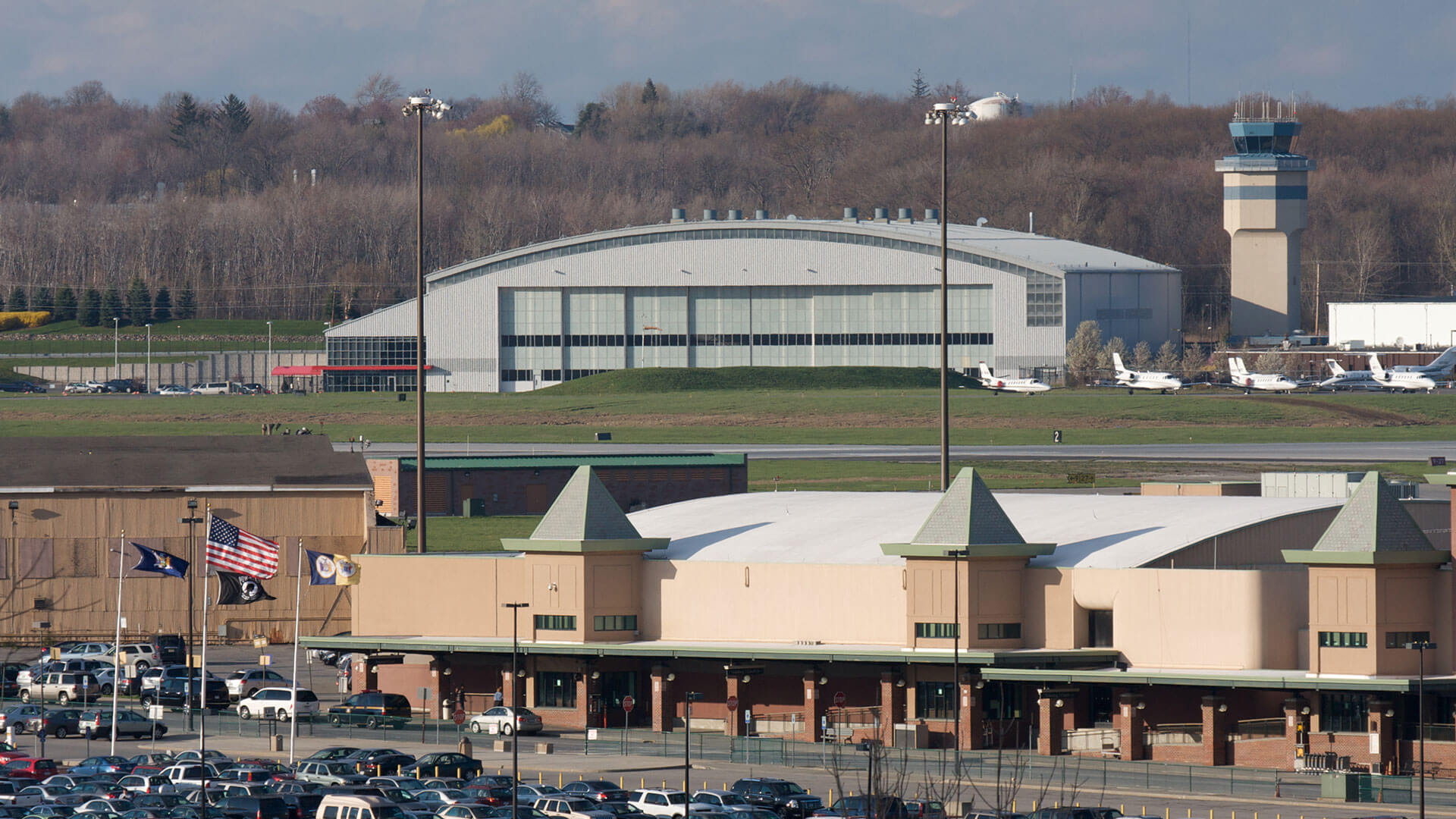
In conjunction with recent safety improvements, Greater Rochester International Airport completed an FAA runway upgrade project that involved installation of a new medium-intensity approach lighting system at the east end of runway 10/28.
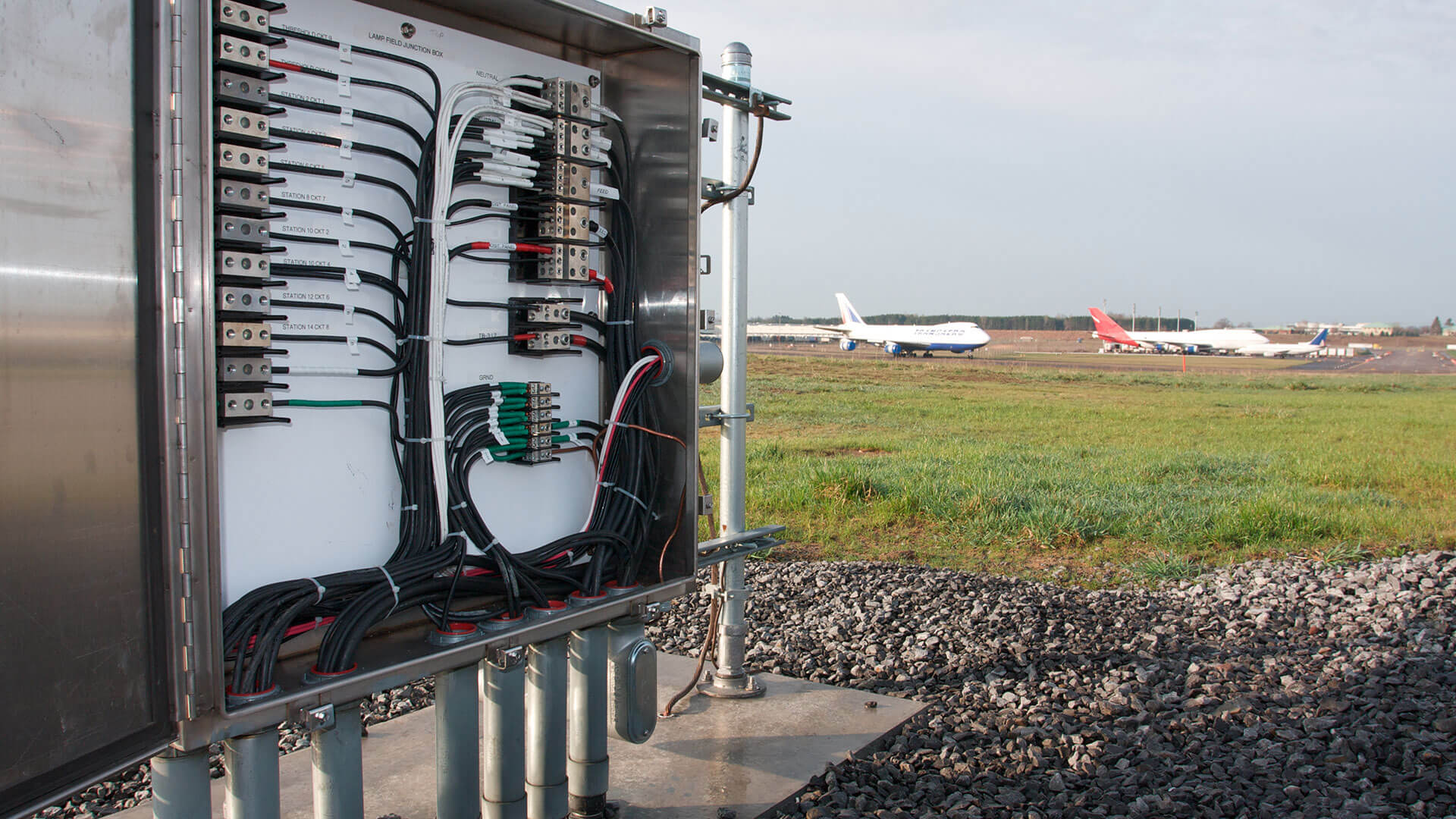
On a 6 month, $900,000 contract with DME Corporation, O’Connell installed GRIA’s new approach lighting system. Our scope of work involved removal of several light towers and the existing control vault building, modifications to light towers, installation of five new light towers, new control vault building, new cabling and controls, new electrical service for the lighting system, and construction of new access roads. One challenging aspect of the project included 350 feet of directional drilling under a heavily travelled section of Interstate 390 and its off-ramps to facilitate power and controls to new light towers outside of airport property. As general contractor on the project, O’Connell provided project management as well as coordination between the FAA, GRIA operations and DME.

The Military Airport Program (MAP) uses federal funds to convert former military airports to civilian use. MAP is part of the Federal Aviation Administration’s (FAA) Airport Improvement Program (AIP) and provides a boost to civilian aviation capacity and capability. Griffiss International Airport, formerly Griffiss Air Force Base, is on the MAP project list and features a 12,000 foot long, 200 foot wide runway. Limited commercial activity makes this a niche airport for the general aviation community and a good “reliever” airport for Eastern New York State and New York City. To bring the facility up to FAA standards, this project was funded to upgrade the airport’s Navigation Aid Systems (NAVAIDS) to ensure safe and reliable operation as a civilian facility.
O’Connell was selected as prime contractor for the 6 month $4.2 million NAVAIDS upgrade project to meet FAA civilian aviation standards. Our diverse specializations and broad experience enabled us to satisfy the full Scope of Work requirements. The project demanded extensive site preparation and construction work which involved excavation, paved access roads, concrete foundations for equipment, clearing heavily wooded areas around the runway, and site restoration. O’Connell provided primary electrical service to all systems along with installing, upgrading, and testing the following NAVAIDS:
Category One Instrument Landing System (ILS)
Distance Measuring Equipment (DME)
Precision Approach Path Indicator (PAPI)
Medium Intensity Approach Lighting System with Runway Sequenced Flashers (MALSR)
Runway End Identifier Lights (REILS)
Capture Effect Glide Slope Equipment (GS)
Construction challenges included management of high ground water at the site as well as swampy areas around the facility that required proper wetlands mitigation measures. Additionally, work crews had to cope with an unusually long rainy period. The schedule was tight and required close coordination with the FAA, airport management, and tenants to maintain continuous airport operational capability. The project was a success from all technical, construction, and management aspects and all work was completed on schedule.

Under a $17 million grant from the FAA’s Airport Improvement Program, funding was made available for Greater Rochester International Airport (GRIA) to improve runway safety. The work involved construction of two new vehicle tunnels, addition and relocation of utilities and removal of obstructions on airport grounds to create a safety zone at the east end of runway 10/28.
On a $1.7 million subcontract from Crane-Hogan Structural Systems, O’Connell provided all electrical construction of underground conduit and cabling as well as light fixtures and controls required for the automated environmental lighting systems of the two vehicle tunnels. Fire alarm and security systems were also installed. The project spanned two years and was completed on schedule.